Navigating 2026 Tax Code Changes: 7 Key Financial Strategies for U.S. Households

Proactively adjusting financial strategies in anticipation of the 2026 tax code changes is essential for U.S. households to effectively manage their tax burden and secure long-term financial health.
The landscape of U.S. taxation is constantly evolving, and the year 2026 is poised to bring significant shifts that could impact nearly every household. Understanding these impending adjustments and implementing proactive financial strategies is not just advisable, but critical. This article aims to guide you through Navigating the 2026 Tax Code Changes: 7 Key Financial Strategies for U.S. Households, ensuring you are well-prepared to optimize your financial well-being in the face of new regulations.
Understanding the Looming 2026 Tax Landscape
The year 2026 marks a pivotal moment for U.S. tax policy, primarily due to the scheduled expiration of several key provisions from the Tax Cuts and Jobs Act (TCJA) of 2017. These expirations will revert many tax parameters to their pre-TCJA levels, potentially affecting everything from individual income tax rates to standard deductions and estate tax exemptions. For U.S. households, this means a likely increase in taxable income for many, and a re-evaluation of current financial planning.
Being informed about these changes is the first step towards effective preparation. While the exact details can still be subject to legislative adjustments, the core framework of the TCJA’s expiration is largely set. Households need to consider how these shifts will influence their take-home pay, investment returns, and overall financial security. Ignoring these upcoming changes could lead to unexpected tax liabilities and missed opportunities for optimization.
Key TCJA Provisions Set to Expire
- Individual Income Tax Rates: Current lower rates are scheduled to revert to higher pre-TCJA levels, impacting all income brackets.
- Standard Deduction Amounts: The significantly increased standard deduction amounts will likely decrease, potentially making itemizing more beneficial for some.
- Child Tax Credit: While some aspects may remain, the expanded credit could be reduced.
- Estate and Gift Tax Exemption: The generous exemption amounts are expected to be cut by approximately half.
The implications of these expirations are far-reaching. For instance, a reduction in the standard deduction might prompt more taxpayers to meticulously track deductible expenses. Similarly, changes in income tax rates could alter the attractiveness of various investment vehicles or retirement contribution strategies. Understanding these foundational shifts is paramount for developing a robust financial plan for the future.
Strategy 1: Re-evaluating Your Income Tax Bracket and Withholding
As individual income tax rates are set to revert to higher levels in 2026, many households will find themselves in a different tax bracket, or at least facing a higher marginal rate within their current bracket. This shift necessitates a careful re-evaluation of your current income and projected income, alongside a critical look at your tax withholding. Failing to adjust your withholding could lead to an unpleasant surprise at tax time, either in the form of a larger tax bill or a smaller refund than anticipated.
Proactive adjustment of your W-4 form with your employer is a simple yet powerful step. By ensuring your withholding accurately reflects your expected tax liability under the new rules, you can avoid underpayment penalties and manage your cash flow more effectively throughout the year. This isn’t just about avoiding a tax bill; it’s about optimizing how much of your hard-earned money stays in your pocket on a regular basis.
Adjusting Your W-4 for 2026
- Review Pay Stubs: Understand your current withholding and how much tax is being taken out per pay period.
- Estimate 2026 Income: Project your total income for 2026, considering any potential raises, bonuses, or changes in employment.
- Consult Tax Brackets: Refer to the projected 2026 tax brackets (once available) to estimate your new marginal tax rate.
- Update W-4: Use the IRS Tax Withholding Estimator tool to help you fill out a new W-4 form and submit it to your employer.
This strategic review should be an annual practice, but it gains particular importance as we approach 2026. A small adjustment now can prevent significant headaches later, ensuring your financial plan remains aligned with the evolving tax environment.
Strategy 2: Maximizing Deductions and Credits Before They Change
With the anticipated reduction in the standard deduction and potential alterations to various credits, now is the time for U.S. households to maximize any available deductions and credits under the current, more favorable rules. This proactive approach can significantly reduce your taxable income and, consequently, your tax liability in the years leading up to 2026.
For those who typically take the standard deduction, it’s worth exploring whether itemizing might become more advantageous in the future, or whether you can accelerate certain deductible expenses into the current tax year. Charitable contributions, medical expenses, and state and local taxes (SALT) are prime areas to review. Understanding which deductions are most likely to be affected will allow for more targeted planning.
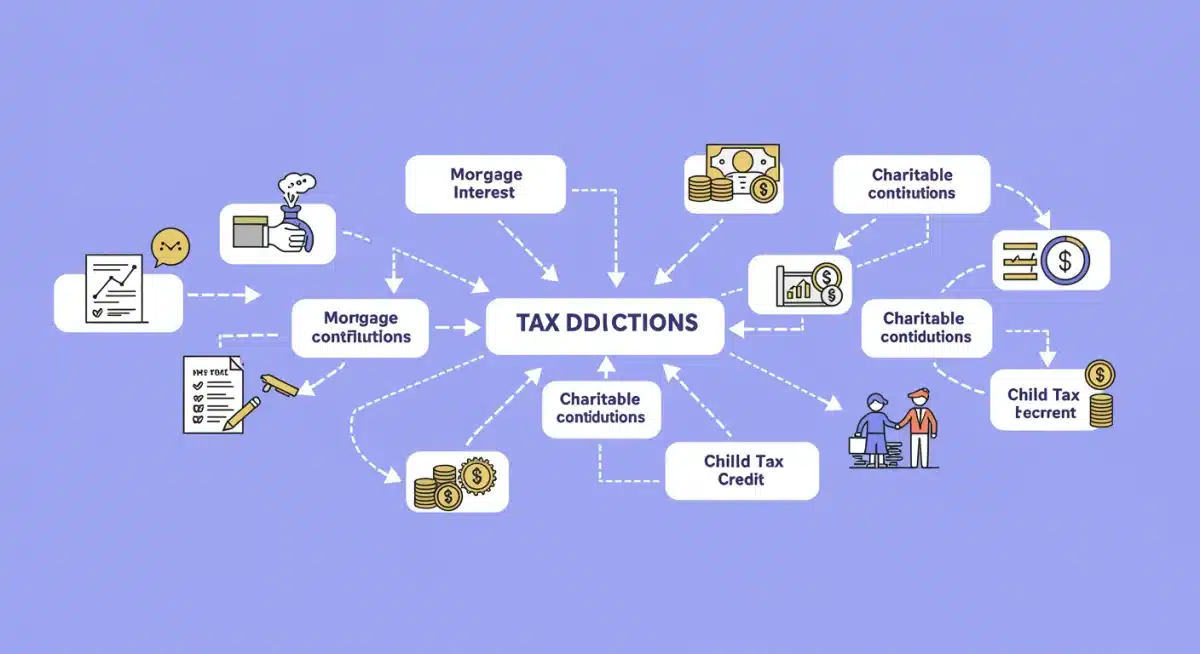
Key Areas for Deduction and Credit Optimization
- Charitable Contributions: Consider front-loading donations through a Donor-Advised Fund to maximize current-year deductions.
- Medical Expenses: If you anticipate significant medical costs, consider consolidating them into a single year to exceed the adjusted gross income (AGI) threshold.
- Child Tax Credit: Understand any proposed changes to the Child Tax Credit and plan accordingly to maximize its benefit while it’s available in its current form.
- SALT Deduction: While the $10,000 cap on state and local tax deductions is a persistent concern, understand how any future adjustments might impact your ability to deduct these expenses.
By strategically planning your expenditures and contributions, you can effectively leverage the current tax code to your advantage, minimizing your tax burden before the 2026 changes take full effect. This requires careful record-keeping and, often, consultation with a tax professional.
Strategy 3: Strategic Retirement Planning and Contributions
Retirement accounts offer powerful tax advantages, and their strategic use becomes even more critical when facing potential tax code changes. The choice between traditional (pre-tax) and Roth (post-tax) accounts, as well as the timing and amount of contributions, can significantly impact your long-term tax liability. As income tax rates are expected to rise, the appeal of certain retirement vehicles may shift.
For many, contributing to traditional IRAs or 401(k)s offers an immediate tax deduction, reducing current taxable income. However, if you anticipate being in a higher tax bracket in retirement, Roth accounts, which offer tax-free withdrawals in retirement, might become more attractive. Conversely, if you expect your income to drop significantly in retirement, traditional accounts might still be the better choice. The key is to project your future income and tax bracket scenarios.
Optimizing Retirement Accounts Post-2026
- Maximize 401(k) and IRA Contributions: Utilize the full extent of contribution limits to reduce current taxable income and grow your retirement savings.
- Consider Roth Conversions: If you anticipate higher tax rates in the future, converting a traditional IRA to a Roth IRA now, while rates are relatively lower, could be a smart move.
- Health Savings Accounts (HSAs): For those with high-deductible health plans, HSAs offer a triple tax advantage (tax-deductible contributions, tax-free growth, tax-free withdrawals for qualified medical expenses) and are an excellent long-term savings vehicle.
- Catch-Up Contributions: If you are aged 50 or older, remember to take advantage of catch-up contributions for your 401(k) and IRA to further boost your tax-advantaged savings.
A comprehensive review of your retirement strategy with a financial advisor can help tailor your contributions and account choices to best suit your individual circumstances and the evolving tax landscape.
Strategy 4: Navigating Capital Gains and Investment Income
The 2026 tax code changes are not expected to directly alter capital gains tax rates, but higher ordinary income tax rates could indirectly affect investment strategies. Understanding how your investment income, including dividends and capital gains, will be taxed is crucial for optimizing your portfolio. Tax-loss harvesting, asset location, and carefully timing the sale of appreciated assets become even more important.
For investors, it’s essential to consider the interplay between long-term capital gains, which are typically taxed at preferential rates, and short-term capital gains, which are taxed as ordinary income. With higher ordinary income rates, the distinction becomes more pronounced. Strategic asset location, placing highly taxed assets in tax-advantaged accounts and less taxed assets in taxable accounts, can help minimize your overall tax drag.
Smart Investment Strategies for Future Tax Codes
- Tax-Loss Harvesting: Regularly review your portfolio for opportunities to sell investments at a loss to offset capital gains and a limited amount of ordinary income.
- Asset Location: Place income-generating investments (like bonds or REITs) in tax-deferred accounts (401(k), IRA) and growth stocks in taxable accounts where long-term capital gains can be realized at lower rates.
- Qualified Dividends: Understand the qualifications for preferential tax treatment on dividends and consider investments that offer qualified dividends if appropriate for your financial goals.
- Review Your Portfolio: Work with a financial advisor to ensure your investment portfolio is structured to be tax-efficient under both current and projected 2026 tax rules.
Proactive management of your investment portfolio, with an eye on tax efficiency, can significantly enhance your after-tax returns, especially as the tax environment shifts.
Strategy 5: Estate Planning and Gift Tax Considerations
One of the most significant changes expected in 2026 is the substantial reduction in the federal estate and gift tax exemption. This means that more estates could become subject to federal estate tax, and individuals looking to make large gifts during their lifetime may face increased gift tax implications. For high-net-worth households, this change necessitates an immediate review and potential restructuring of their estate plans.
The current exemption allows individuals to transfer a considerable amount of wealth tax-free. However, with the scheduled reduction, many families who previously didn’t need to worry about federal estate tax may suddenly find themselves in a taxable situation. This makes gifting strategies, trusts, and other wealth transfer mechanisms more critical than ever before.
Key Estate Planning Actions for 2026
- Utilize Current Gift Tax Exemption: Consider making substantial gifts before the end of 2025 to take advantage of the higher exemption amounts.
- Review Existing Estate Documents: Update wills, trusts, and power of attorney documents to reflect potential changes in tax law and your family’s circumstances.
- Consider Irrevocable Trusts: These trusts can remove assets from your taxable estate, but they come with their own complexities and should be carefully considered with legal counsel.
- Life Insurance Strategies: Life insurance can be a valuable tool in estate planning, providing liquidity to cover potential estate taxes or to equalize inheritances.
Engaging with an estate planning attorney and a financial advisor is paramount to understanding the full implications of these changes and implementing strategies that align with your wealth transfer goals.
Strategy 6: Small Business and Self-Employment Tax Adjustments
For U.S. households with small businesses or self-employment income, the 2026 tax changes could bring unique challenges and opportunities. The qualified business income (QBI) deduction, a key provision of the TCJA, is also set to expire. This deduction has allowed many pass-through entities to deduct up to 20% of their qualified business income, significantly reducing their tax burden. Its expiration will mean higher taxable income for many business owners.
Beyond the QBI deduction, self-employed individuals need to revisit their estimated tax payments and consider how changes in individual income tax rates will affect their overall tax liability. Exploring different business structures or accelerating certain business expenses could be beneficial before 2026. Careful planning is essential to maintain financial health for your business and your household.
Preparing Your Business for Tax Changes
- Re-evaluate Business Structure: Consult with a tax professional to determine if your current business structure remains the most tax-efficient option post-2026.
- Optimize Business Expenses: Look for opportunities to accelerate deductible business expenses into current tax years to maximize deductions while the QBI deduction is still in effect.
- Adjust Estimated Taxes: Recalculate your estimated tax payments to accurately reflect anticipated income and the new tax rates.
- Explore Retirement Plans for Self-Employed: Maximize contributions to solo 401(k)s, SEP IRAs, or SIMPLE IRAs to reduce current taxable income.
Small business owners and self-employed individuals must be particularly vigilant in their tax planning, as the changes could have a magnified effect on their overall financial situation. Professional advice is highly recommended.
Strategy 7: Consulting with Tax Professionals and Financial Advisors
While understanding the upcoming changes is crucial, the complexity of the U.S. tax code, combined with individual financial situations, often requires expert guidance. Consulting with qualified tax professionals and financial advisors is perhaps the most important strategy for navigating the 2026 tax code changes effectively. These experts can provide personalized advice tailored to your specific circumstances, helping you identify opportunities and mitigate risks that you might overlook.
A good advisor will not only help you understand the letter of the law but also how it applies to your unique financial picture. They can assist with scenario planning, helping you visualize the impact of different strategies on your tax liability and long-term financial goals. Their expertise can be invaluable in making informed decisions that protect and grow your wealth.
Benefits of Professional Guidance
- Personalized Tax Planning: Receive advice tailored to your income, investments, family situation, and financial goals.
- Stay Updated: Professionals stay abreast of the latest legislative changes and interpretations, ensuring your plan is always current.
- Identify Opportunities: Discover deductions, credits, and strategies you might not be aware of.
- Avoid Penalties: Ensure compliance with tax laws and avoid costly errors or underpayment penalties.
- Long-Term Financial Health: Integrate tax planning into a broader financial strategy for sustainable wealth growth.
Don’t wait until the last minute. Begin discussions with your tax professional and financial advisor now to develop a comprehensive plan that prepares you for the 2026 tax landscape and beyond.
| Key Strategy | Brief Description |
|---|---|
| Re-evaluate Withholding | Adjust W-4 to match potential new tax brackets and rates. |
| Maximize Current Deductions | Accelerate deductible expenses before changes reduce their value. |
| Strategic Retirement Planning | Optimize contributions and account types (Roth vs. Traditional). |
| Consult Professionals | Seek expert advice for personalized, comprehensive tax and financial planning. |
Frequently Asked Questions About 2026 Tax Changes
The main drivers are the scheduled expirations of key provisions from the Tax Cuts and Jobs Act (TCJA) of 2017. These expirations will revert many individual income tax rates, standard deduction amounts, and estate tax exemptions to their pre-TCJA levels, impacting most U.S. taxpayers.
The significantly increased standard deduction amounts from the TCJA are expected to decrease. This means fewer taxpayers might find it advantageous to take the standard deduction, potentially making itemizing deductions a more common and beneficial strategy for reducing taxable income.
Considering a Roth conversion before 2026 can be a smart move, especially if you anticipate being in a higher tax bracket in the future. Converting now, while current income tax rates are relatively lower, could allow you to pay taxes on the conversion at a more favorable rate, leading to tax-free withdrawals in retirement.
The federal estate and gift tax exemption is set to be substantially reduced in 2026. This means more estates may become subject to federal estate tax. High-net-worth individuals should review their estate plans immediately to potentially utilize the higher current exemption through gifting strategies or trust planning.
A tax professional can provide personalized advice tailored to your unique financial situation, helping you understand the specific impacts of the 2026 tax code changes. They can identify optimal strategies for deductions, investments, and estate planning, ensuring compliance and maximizing your financial well-being.
Conclusion
The impending 2026 tax code changes represent a pivotal moment for financial planning in U.S. households. While the specifics are still unfolding, the overarching theme is clear: proactive engagement and strategic adjustments are essential. By re-evaluating your income tax bracket, maximizing current deductions, optimizing retirement and investment strategies, and carefully considering estate planning, you can position your household for financial resilience. Most importantly, leveraging the expertise of tax professionals and financial advisors will provide the tailored guidance necessary to confidently navigate this evolving tax landscape, ensuring your long-term financial goals remain within reach.